
Concrete or asphalt driveway: compare what matters
Start with our driveway options NZ guide if you are also considering gravel or pavers. If the choice is between concrete and asphalt, compare them against the same site layout, loading requirements and drainage design. Otherwise two apparently similar prices may describe quite different jobs.
- Appearance
- Concrete can have different textures, aggregates and colours, depending on the chosen specification. Asphalt normally gives a continuous dark appearance. View an appropriate finished example before agreeing the look.
- Construction
- Concrete needs formwork, planned joints and curing. Asphalt needs suitable preparation, laying and compaction. Both depend on a properly designed and prepared base.
- Access
- Concrete requires a planned period for strength development before vehicle use. Asphalt also needs protection after installation, with timing affected by the material and conditions. Get project-specific instructions.
- Future work
- Concrete repairs can leave visible changes in colour or texture. Asphalt can be patched or resurfaced where the existing pavement is suitable, but an underlying failure still needs to be addressed.
- Care
- Keep drains and edges clear, deal with spills appropriately and inspect changes in the surface. Follow the selected finish or pavement system’s care instructions.
Compare installation cost and future work
Ask for both options to include the same area and preparatory work. Excavation, unsuitable ground, spoil disposal, drainage, edges and access can be substantial parts of either package. A surface-only figure does not tell you the cost of a finished, usable driveway.
Identify optional decorative finishes separately from the functional base specification. For concrete, agree texture, colour or exposed aggregate before placement. For asphalt, confirm the pavement specification and edges for the expected use. Include any public crossing work as a separate item with its approval responsibilities.
Then compare the work each option may need later. Ask what inspection, cleaning, coating or repair is appropriate for the selected product and environment. Plan future care around the selected surface and its use. Loads, ground movement, drainage, installation and care all affect how it performs over time.
Durability depends on how the driveway is used
Tell the designer and construction team about more than the car you park there today. Include trailers, delivery trucks, waste collection or other occasional loading. A motorbike stand or another concentrated load is different from a vehicle tyre spread over a larger contact area.
Asphalt needs particular care around tight stationary turns, unsupported edges and concentrated loads, especially when new or warm. Concrete also needs a specification suited to its loads and good jointing and curing practice. Good ground preparation is essential for both surfaces.
If a previous driveway has cracked, sunk or developed potholes, establish the cause before deciding to cover it. Record where the damage lies and whether it changes after rain. Our driveway drainage problems guide helps separate a surface observation from the wider assessment that may be needed.
Climate, water and the site layout
Plan where surface water will go before selecting the appearance. Conventional concrete and asphalt surfaces generally shed water rather than letting it pass through, so falls, collection points and a suitable outlet are central to the design. Permeable concrete or asphalt is a different specified system, not a property of every surface made from those materials.
Temperature and weather affect construction and early care. Agree how the work will be protected and when access can resume, rather than relying on a fixed number of days from a general guide. Keep soil and landscaping from compromising the edges or the intended drainage path.
Also consider pedestrians. A clear route to the door should remain usable when vehicles are parked. Show gate swings, service covers and garage thresholds on the same plan. These interfaces influence levels, joints and construction stages before either material is laid.
Which material is better for your project?
Concrete is worth considering when a formed finish, defined edges and coordinated texture or colour are central to the design. Asphalt is worth considering when a continuous dark finish and a pavement that can be locally reinstated suit the brief. Ask the team to test either choice against site conditions, vehicles, drainage and future work.
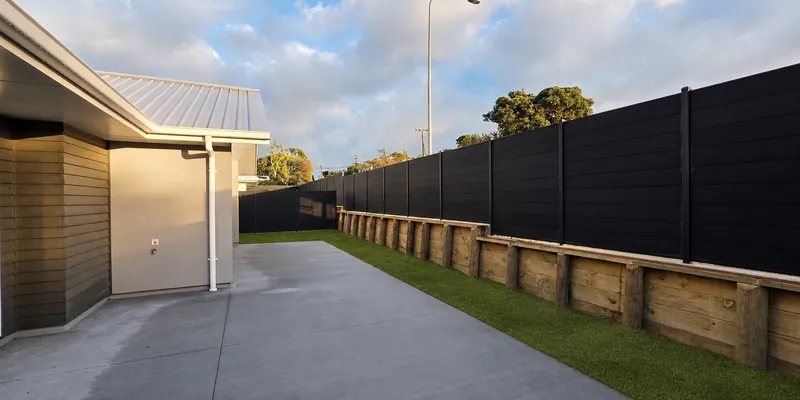
For example, a new residential development may need driveway levels, paths, fences and lawns completed together before occupation. At our Raumati Beach development, that package included concrete driveways and paths. We plan driveway levels and construction stages alongside paths, fences and lawns so the finished site is ready for occupation.
Take these questions into the quote discussion
- Are removal, excavation and disposal included in both options?
- What base and drainage work does the site need?
- Which vehicles and turning loads are included in the design?
- What finish will be supplied, and can I view a suitable example?
- How long will access be restricted, and what happens during that period?
- What care instructions and handover information will I receive?
Our driveway and hardstanding construction service brings the agreed works into the project programme. For a regional enquiry, see driveways in Palmerston North or driveways in Wellington.
Your questions
Is concrete always better than asphalt?
The better choice depends on the site, expected vehicles, finish and maintenance plan. Compare complete specifications and the work beneath each surface, rather than choosing from the material name alone.
Can a new surface fix driveway drainage?
Only if the work addresses the cause of the problem. Falls, drainage points, outlets and underlying ground conditions may need attention as part of the package.